
How to plan a good training session
Portal Editorial Team · September 13, 2026
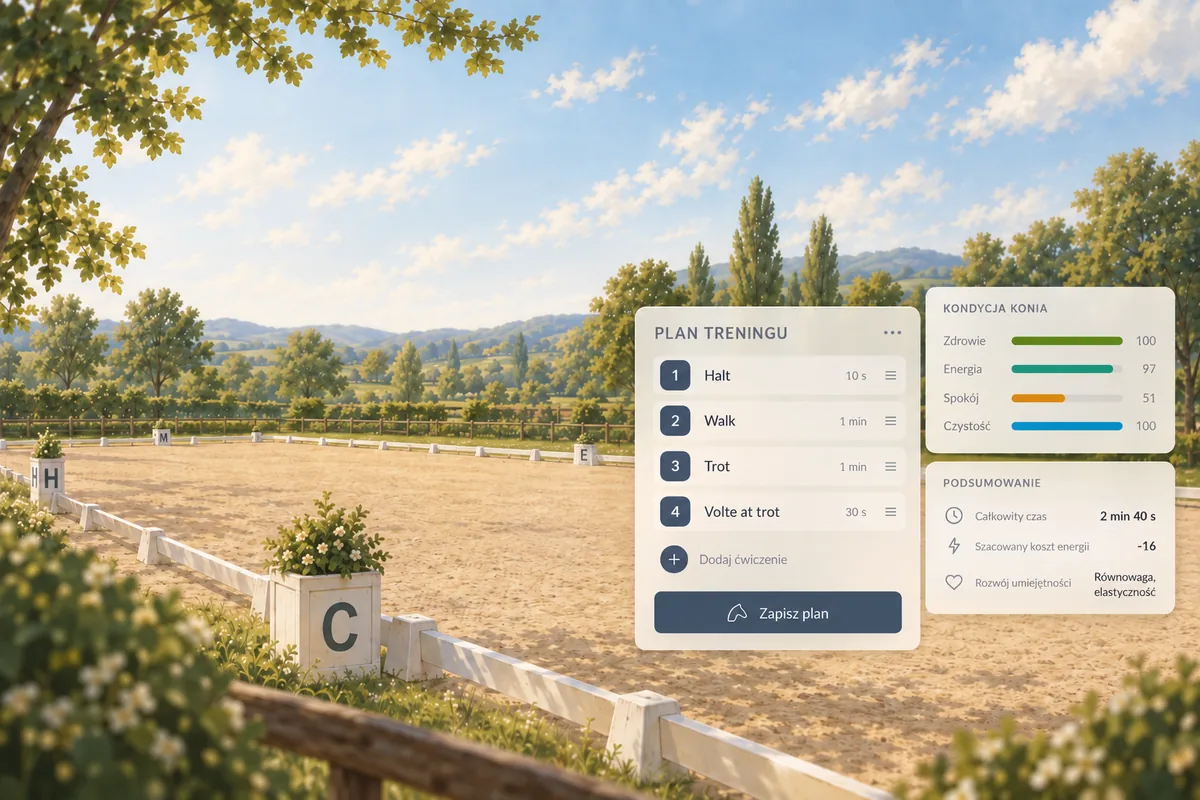
A good training session is not about fitting as many difficult exercises as possible into one plan. First, you need to know what you actually want to improve and whether the horse is ready to work on it today.
The same plan can be excellent for one horse and completely unsuitable for another.
Begin with a goal
Every exercise asks something of the horse. Some rely more heavily on balance, while others require strength, suppleness, coordination, or stamina.
Those are the qualities that develop through work. If you want to improve a particular aspect of the horse, choose exercises that genuinely use it. There is little value in training a little of everything simply because the horse can perform it.
Natural aptitude also affects fatigue. A horse physically suited to a type of work performs it at a lower cost than one that finds it demanding.
This does not mean that training can turn every horse into a champion at everything. Work develops a horse’s abilities, but only as far as its individual potential allows.
Train the horse you have
Exercise difficulty is not the only consideration. Temperament matters too.
Very dynamic and stimulating work may stress a calm horse. An energetic, reactive horse may not enjoy long, monotonous work either; an activity that is too quiet can also be frustrating.
Instead of asking only “can this horse do it?”, consider: does this kind of work suit this horse?
Even the training location matters. More social horses may cope poorly with working alone on the trail, while more independent horses can react more strongly to work in an arena or on the lunge.
Take care of the basics first
Do not plan an ambitious session for a horse that begins work hungry or already highly stressed.
Hunger increases stress, and when satiety becomes very low, exertion also starts to affect health.
High stress does not disappear when the horse leaves the arena. A horse that has not calmed down recovers health less effectively during the night. Sometimes a lighter session or a quiet day is a better decision than adding more difficult exercises.
One session, one kind of work
Lunging, ridden arena work, and trail riding are three different forms of training. You cannot combine them in one session. Changing from lunging to a jumping course, or leaving the arena for a trail ride, means beginning another session.
This also makes sense from a training perspective. Lunging teaches different things from ridden work, while the trail presents different challenges from an arena.
Before beginning a session, check
- What do I want to improve today?
- Which exercises genuinely develop the necessary qualities?
- Does their difficulty match the horse’s current ability?
- Does this type of work suit the horse’s temperament?
- Is the horse well fed and starting without excessive stress?
- Have I chosen the right kind of work: lunging, arena riding, or trail riding?
The best plan does not have to be the longest or the most difficult.
Above all, it should make sense for this particular horse: its build, character, training, and the goal you are trying to achieve.