
From genotype to conformation
Inheritance of equine appearance in EWO
A publication of the Breeding Union
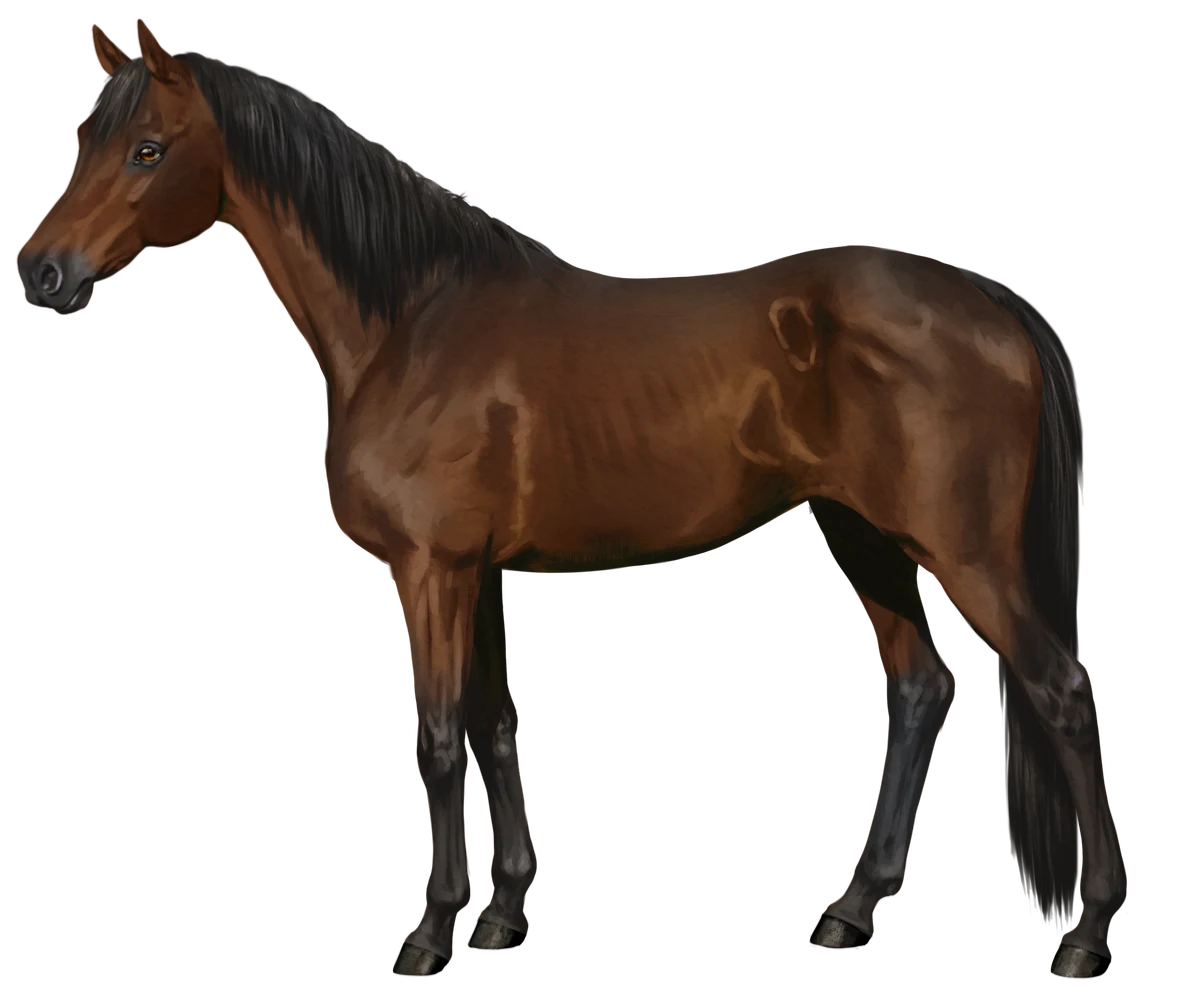
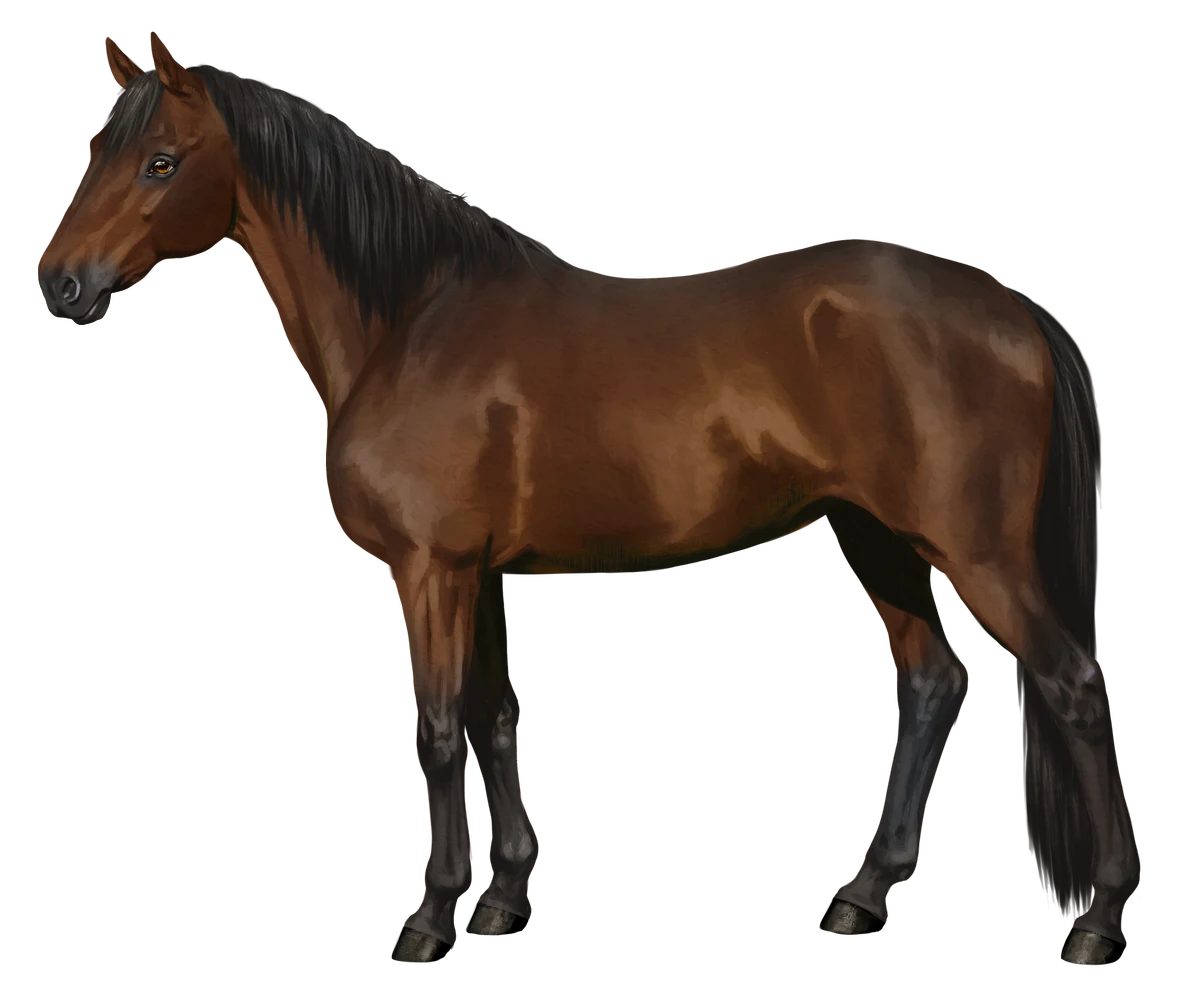
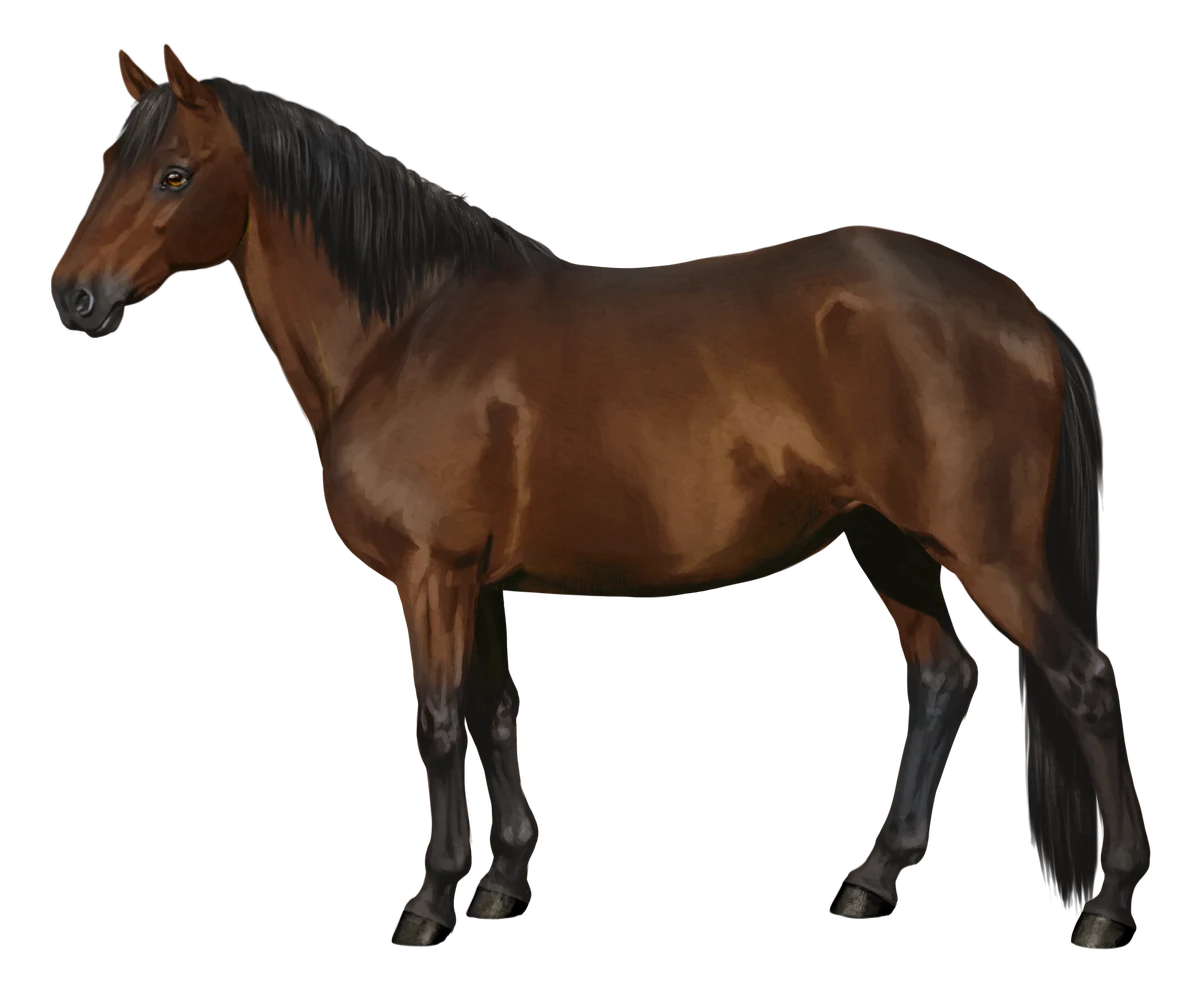
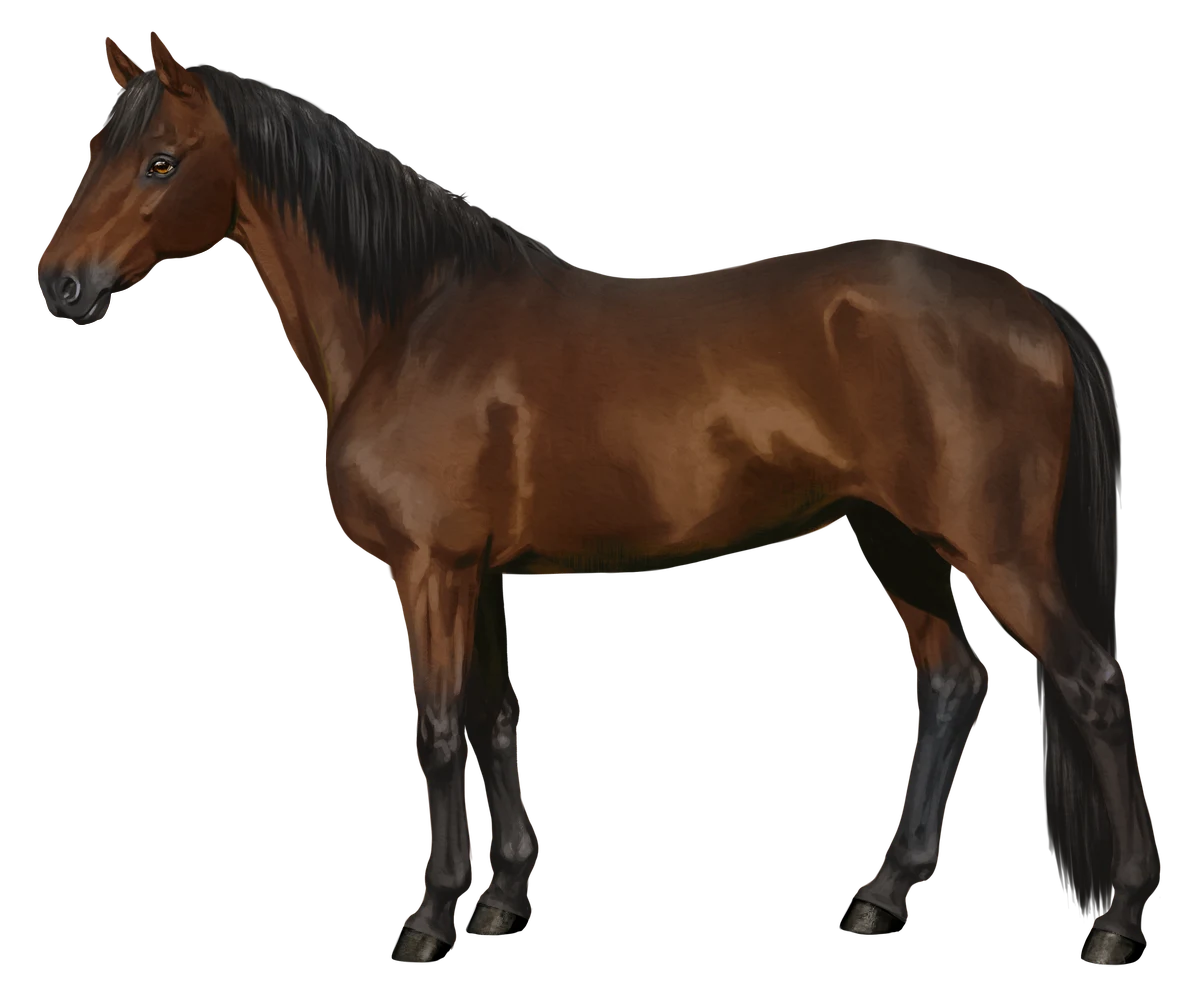
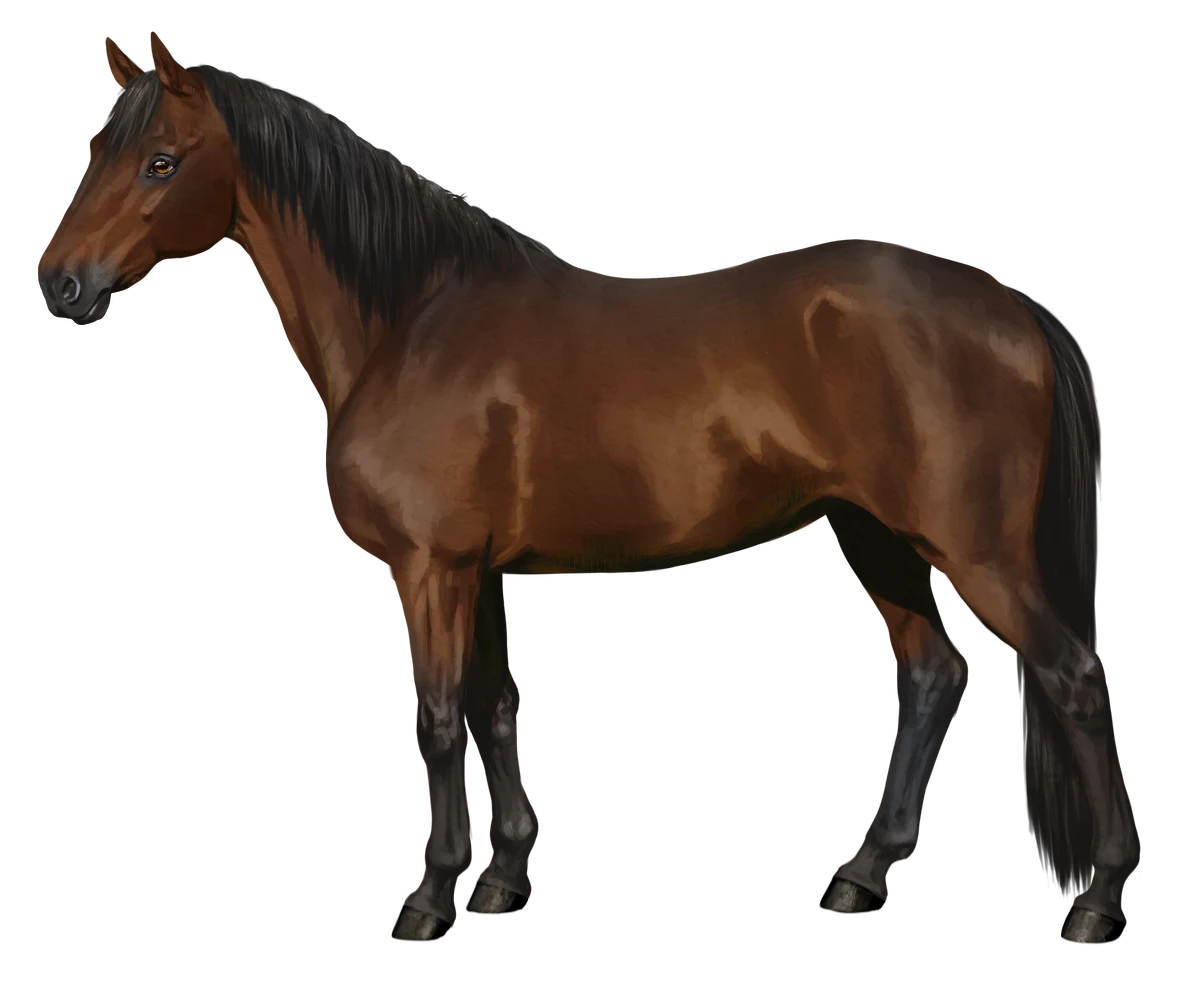
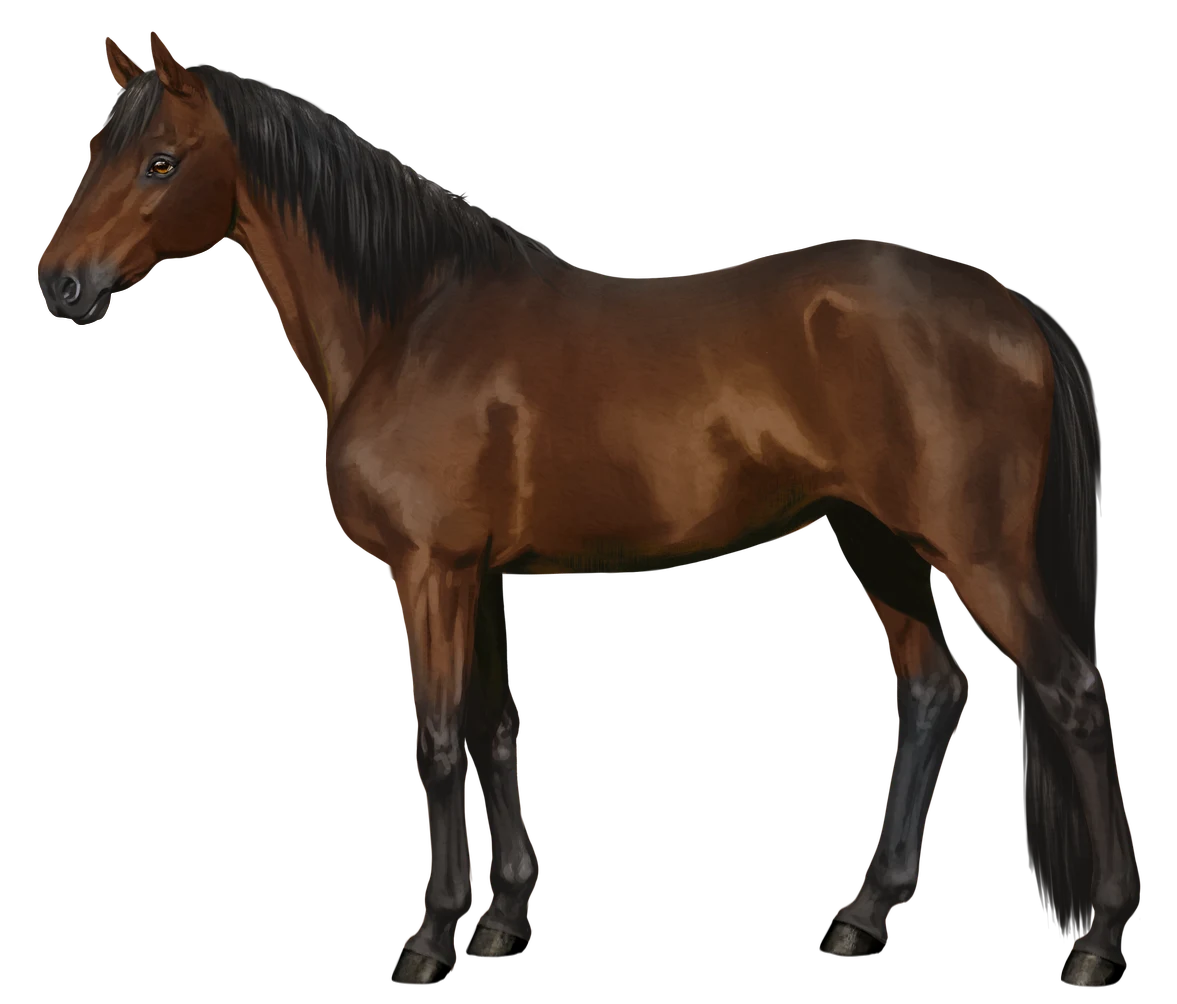
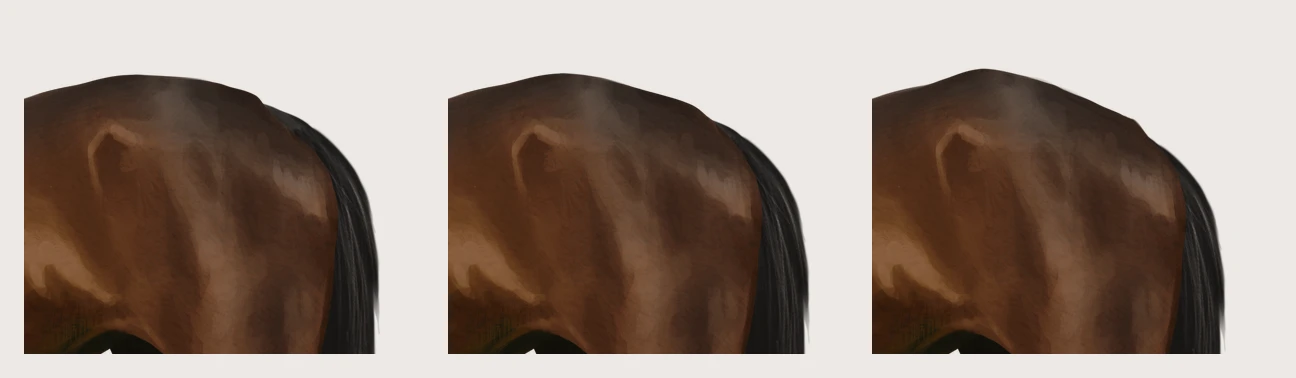
In EWO, every modelled hereditary conformation trait is reflected in the horse’s actual appearance. Neck length, body and leg proportions, croup and withers shape, head profile, bone and muscling contribute to the silhouette shown in its illustration. The same applies to mane and tail abundance, hair texture and feathering. Breeders can therefore select for a particular, recognisable type and observe the results across generations.
Coat colour forms a second, equally complex layer. The basic loci determine colour and the presence of modifiers, while inherited quantitative traits vary the shade of the coat and the extent of black on bay horses. A colour name, even combined with a breed, consequently leaves much of a horse’s appearance undescribed.
Two levels of description: genotype and phenotype
A horse’s appearance expresses its inherited traits. It does not, however, reveal every variant the animal can pass to its offspring. At loci recorded as allele pairs, each parent contributes one of its two alleles to the foal. This applies to both purebred and crossbred horses.
Two horses with similar phenotypes may consequently produce different offspring. A bay heterozygous at Extension can pass on the allele for chestnut; a bay homozygous for E cannot. The colour name alone does not reveal this distinction.
In EWO, breeders currently have no direct access to the genotype. Phenotype, ancestry and offspring provide information instead. The recurrence of a trait within a family and its expression in a suitable mating therefore have practical value when choosing breeding pairs.
Many shades of the same colour
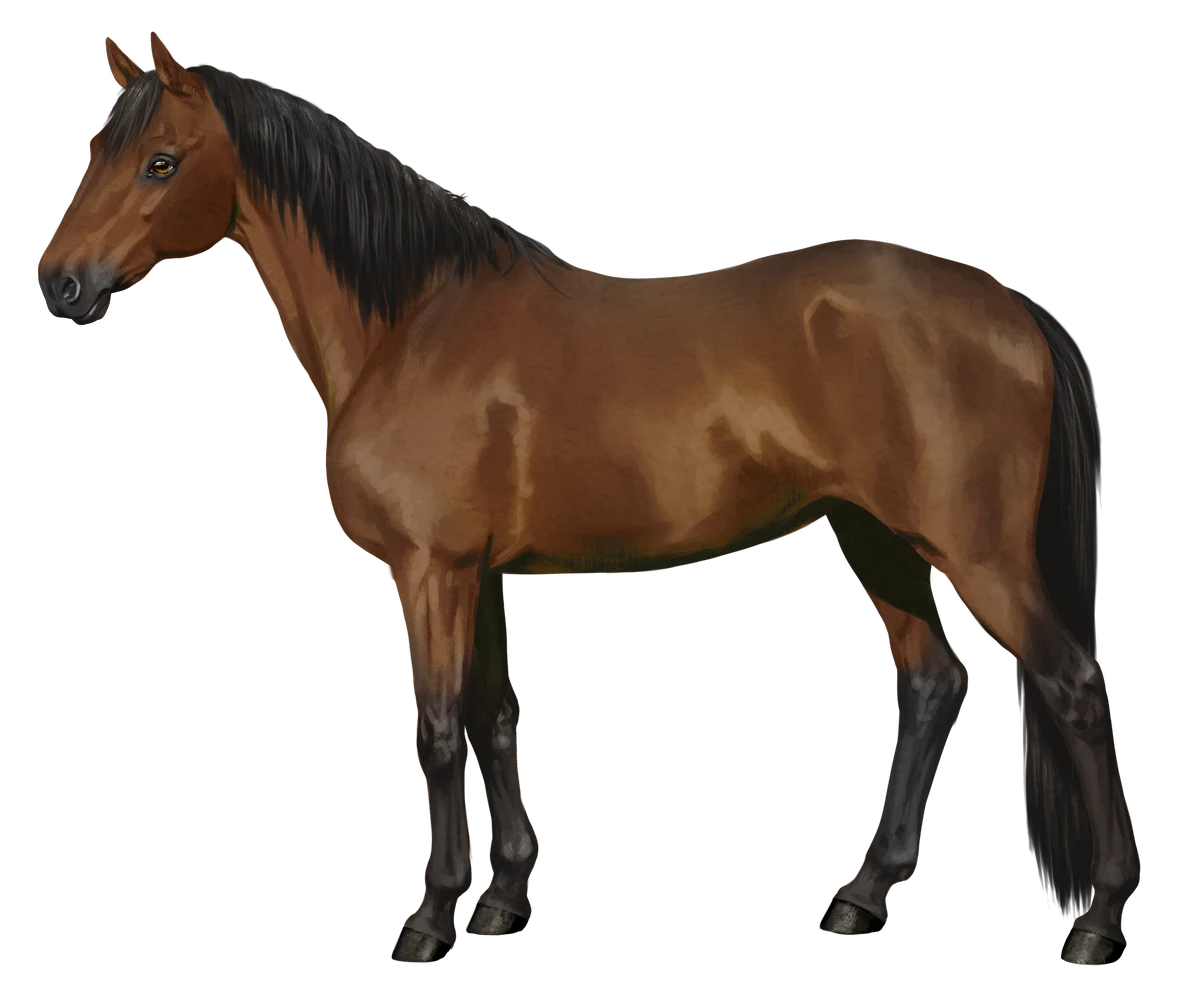
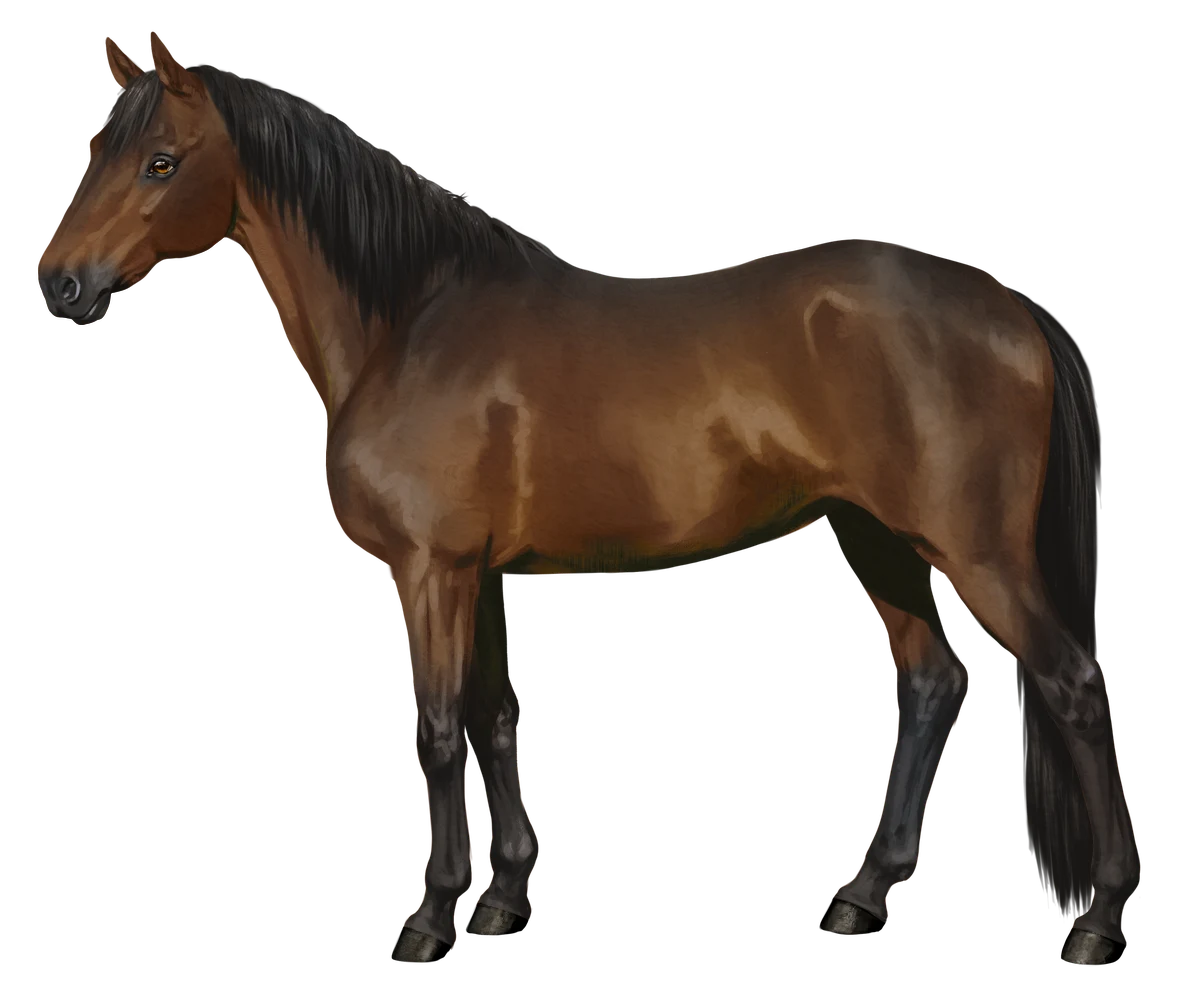
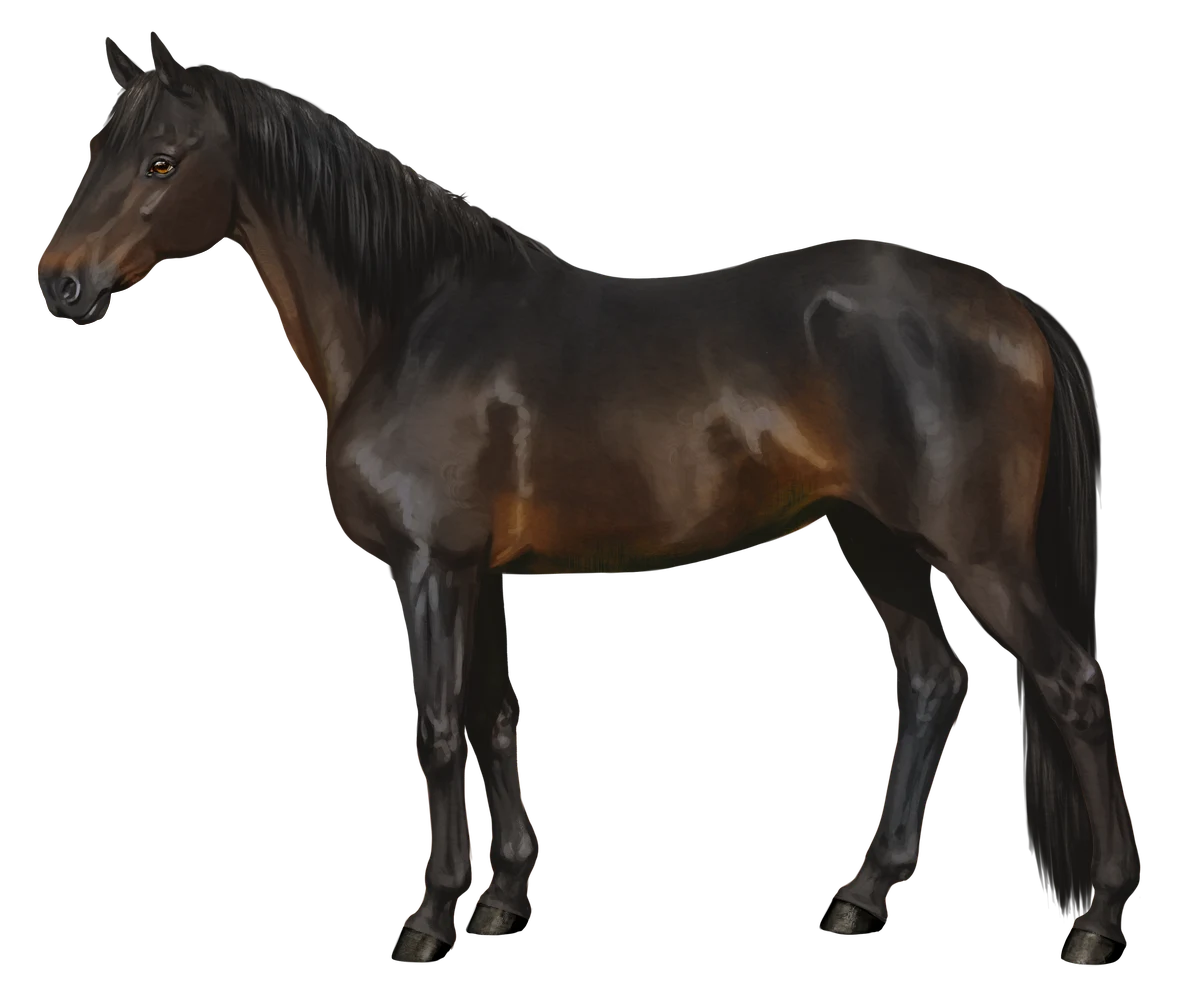
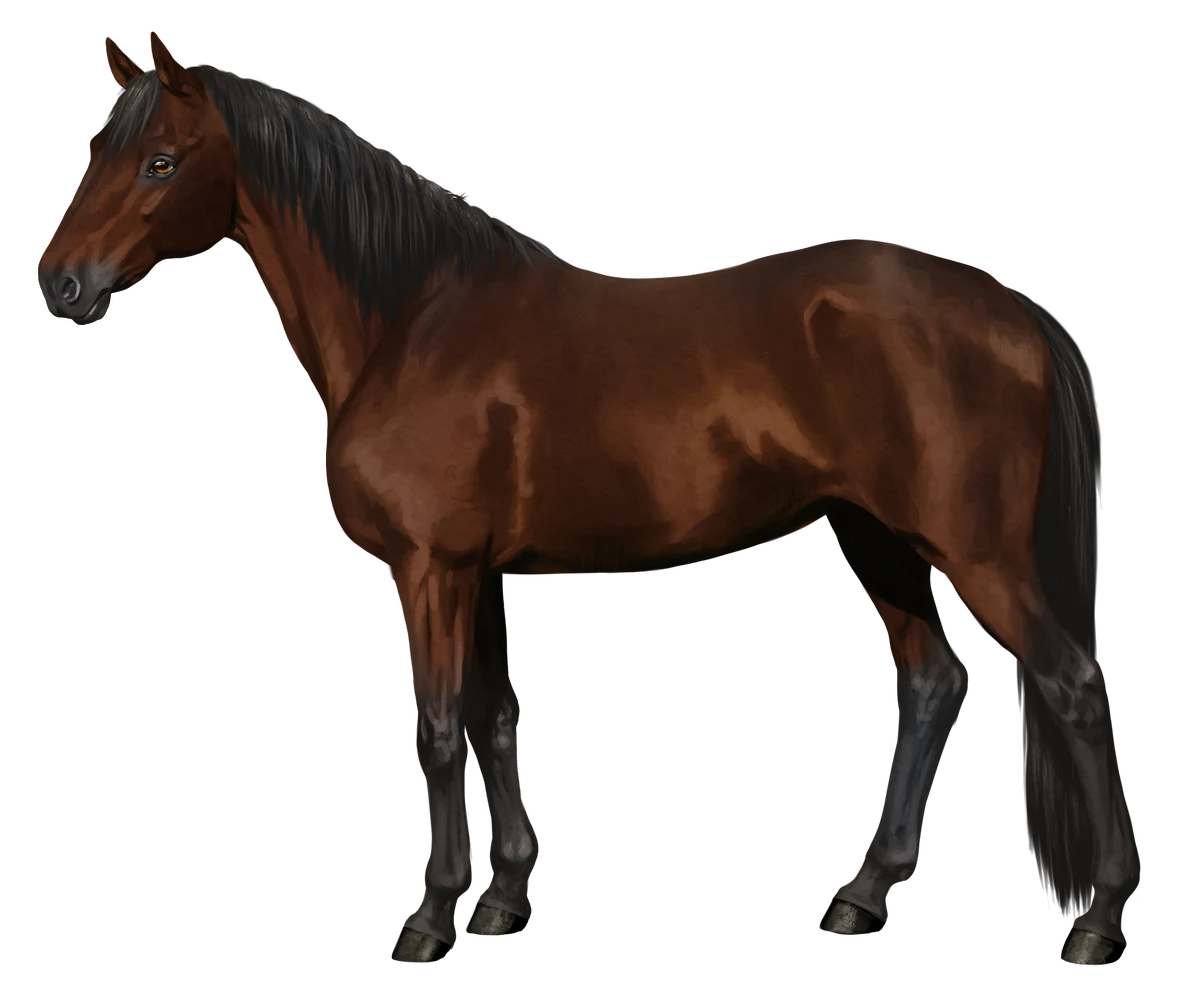
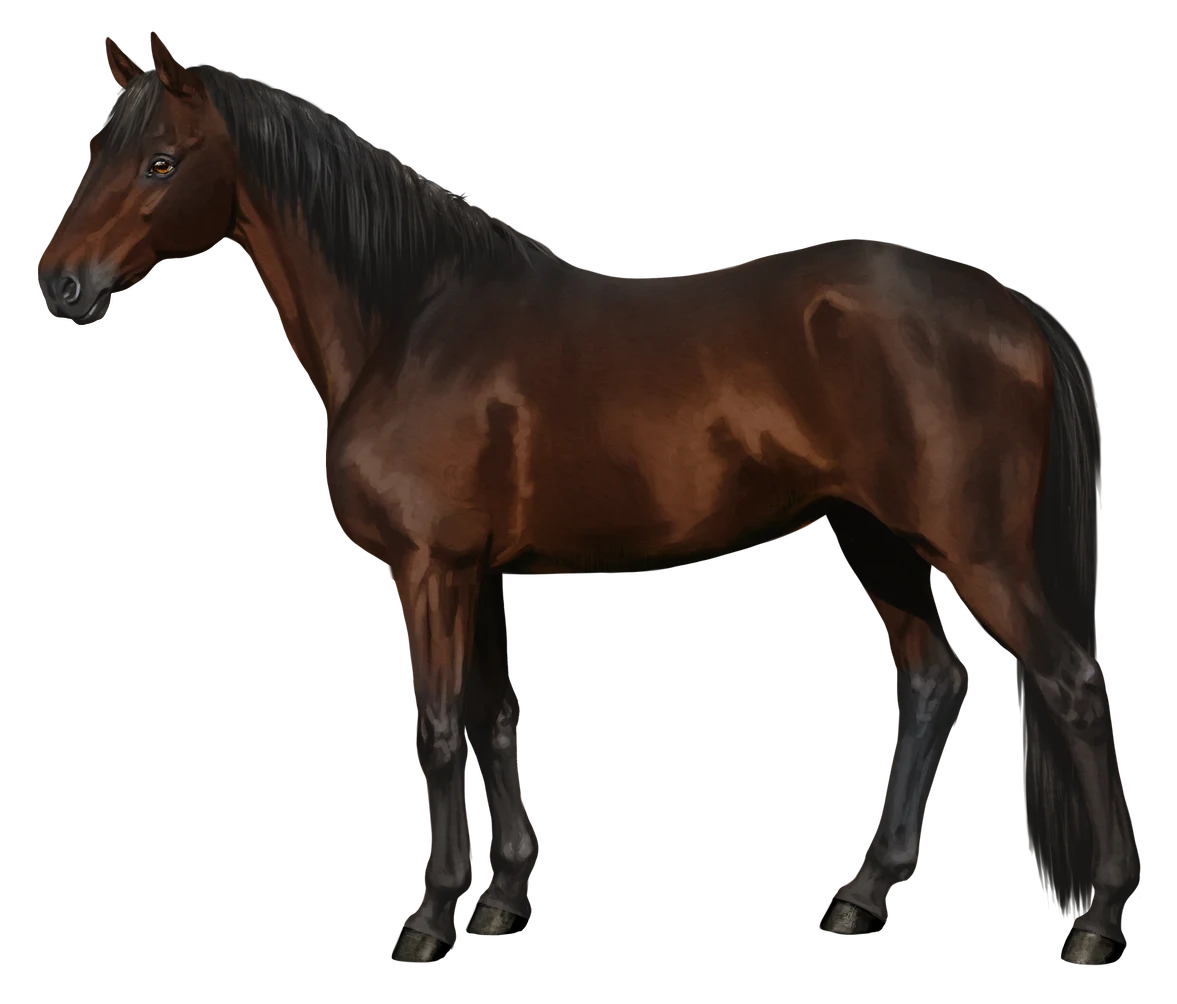
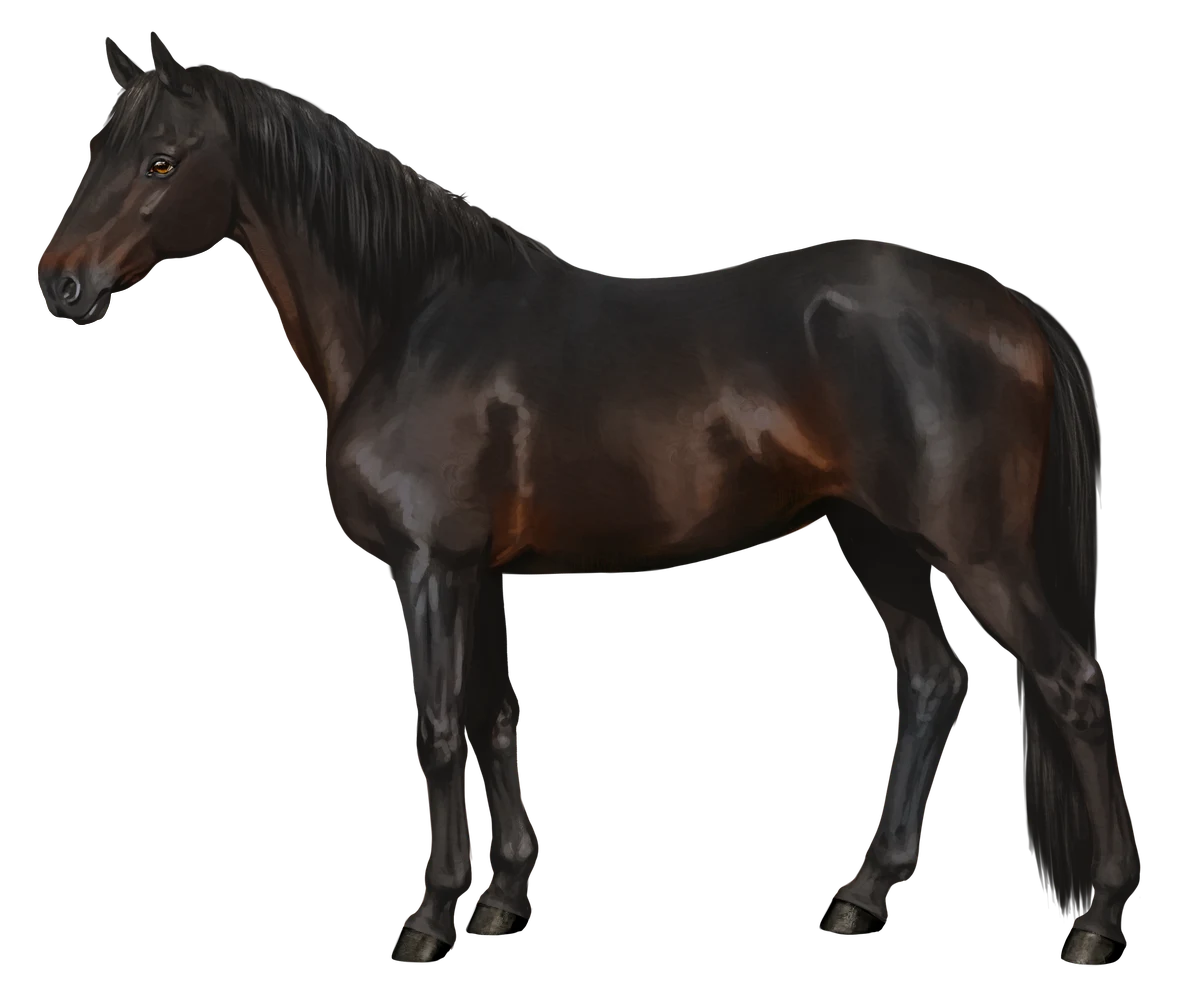
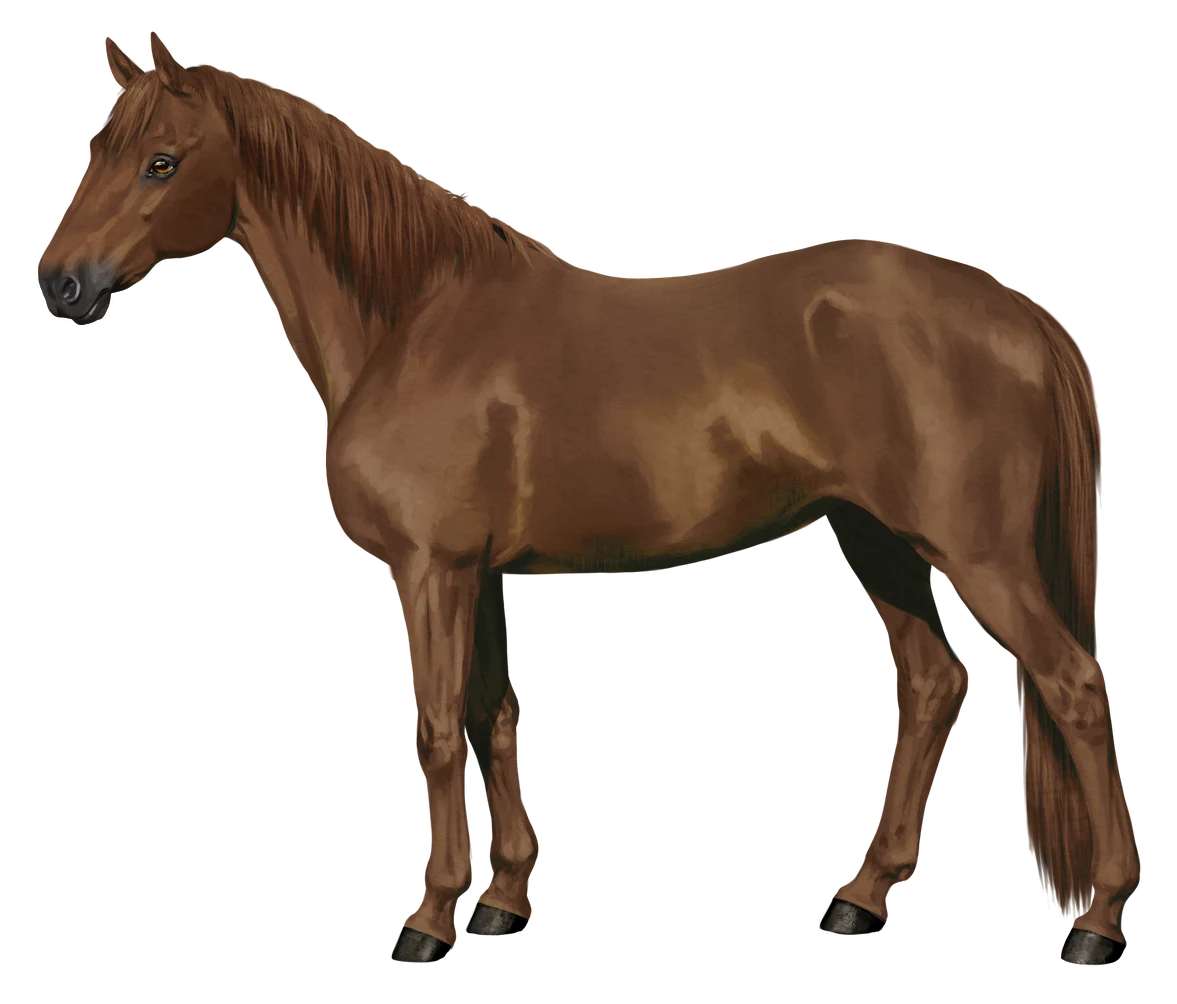
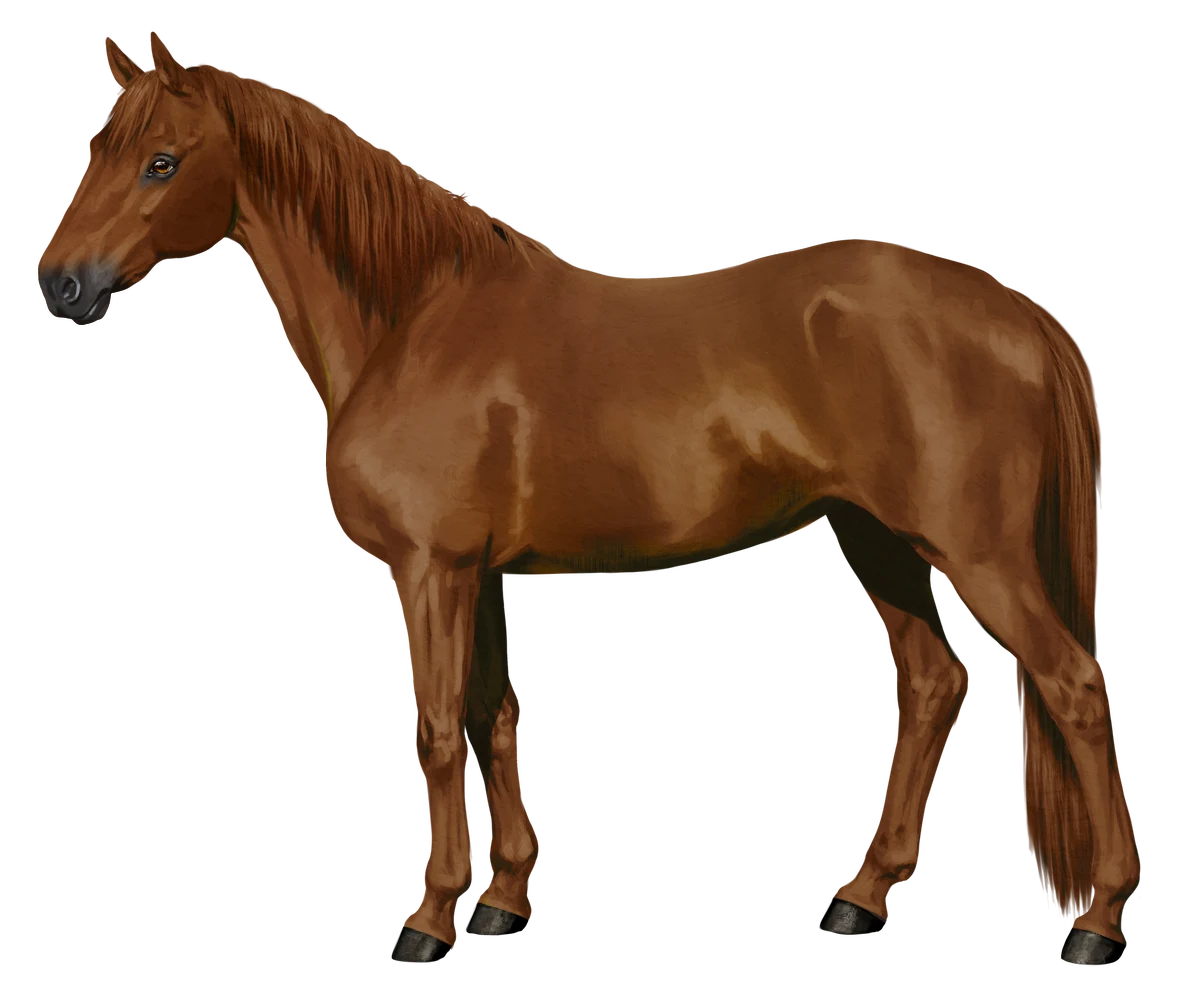
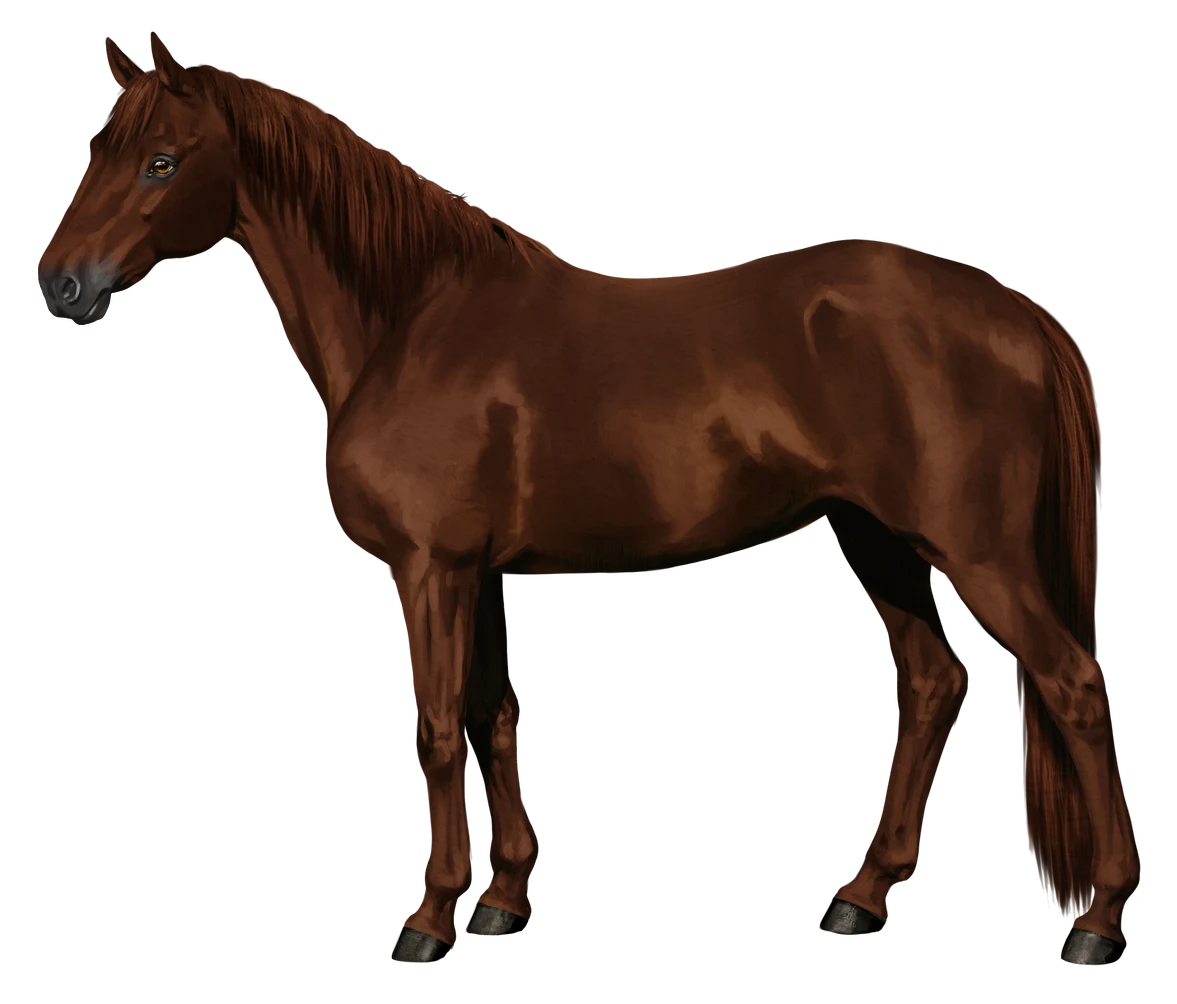
In EWO, “chestnut” encompasses a whole range of appearances. The coat can be lighter or darker, with a more muted or more intense red. Bays additionally vary in the extent of black on the body. Two horses described as bay in their passports can therefore differ just as clearly as two chestnuts.
These differences arise from inherited traits: shade, red intensity and the extent of black in bays. Each varies continuously, and their combination determines the individual appearance of the coat. Even identical genotypes at the basic Extension and Agouti loci do not therefore imply an identical colour.
Offspring receive these traits based on their parents’ values, with some variation. Breeding dark chestnuts or bays with limited black on the body can therefore be a deliberate selection goal. Obtaining the desired base colour is only the beginning of selecting its shade.
EWO currently also includes Cream, which dilutes coat colour, and flaxen, which lightens the mane and tail on a chestnut base. These modifiers act on the horse’s individual base colour, retaining the influence of its shade; horses with the same diluted colour can therefore differ from one another too. Horses carrying further dilution genes will gradually be introduced, expanding the possibilities for combining them with existing colour traits.
Conformation as a set of inherited traits
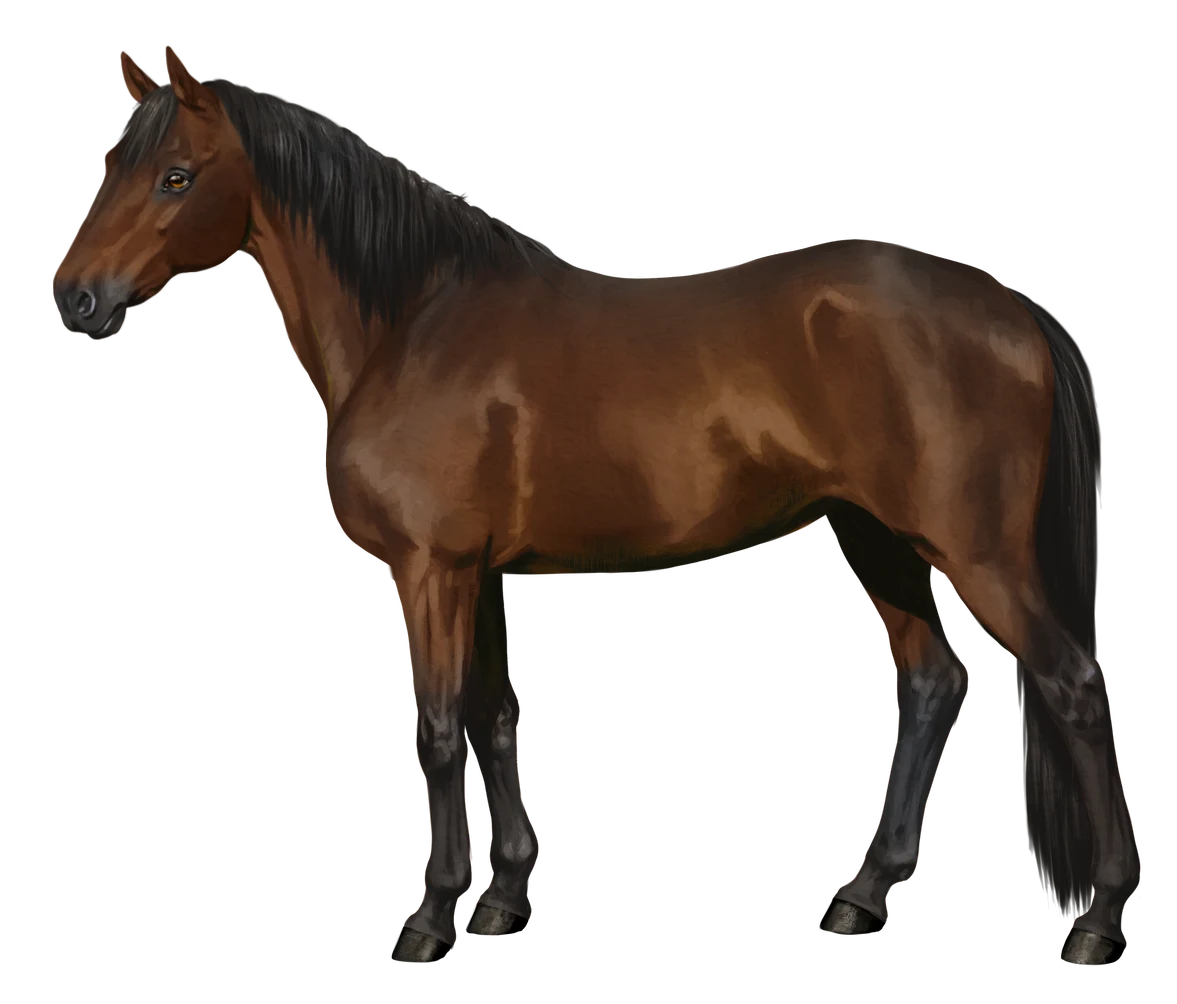
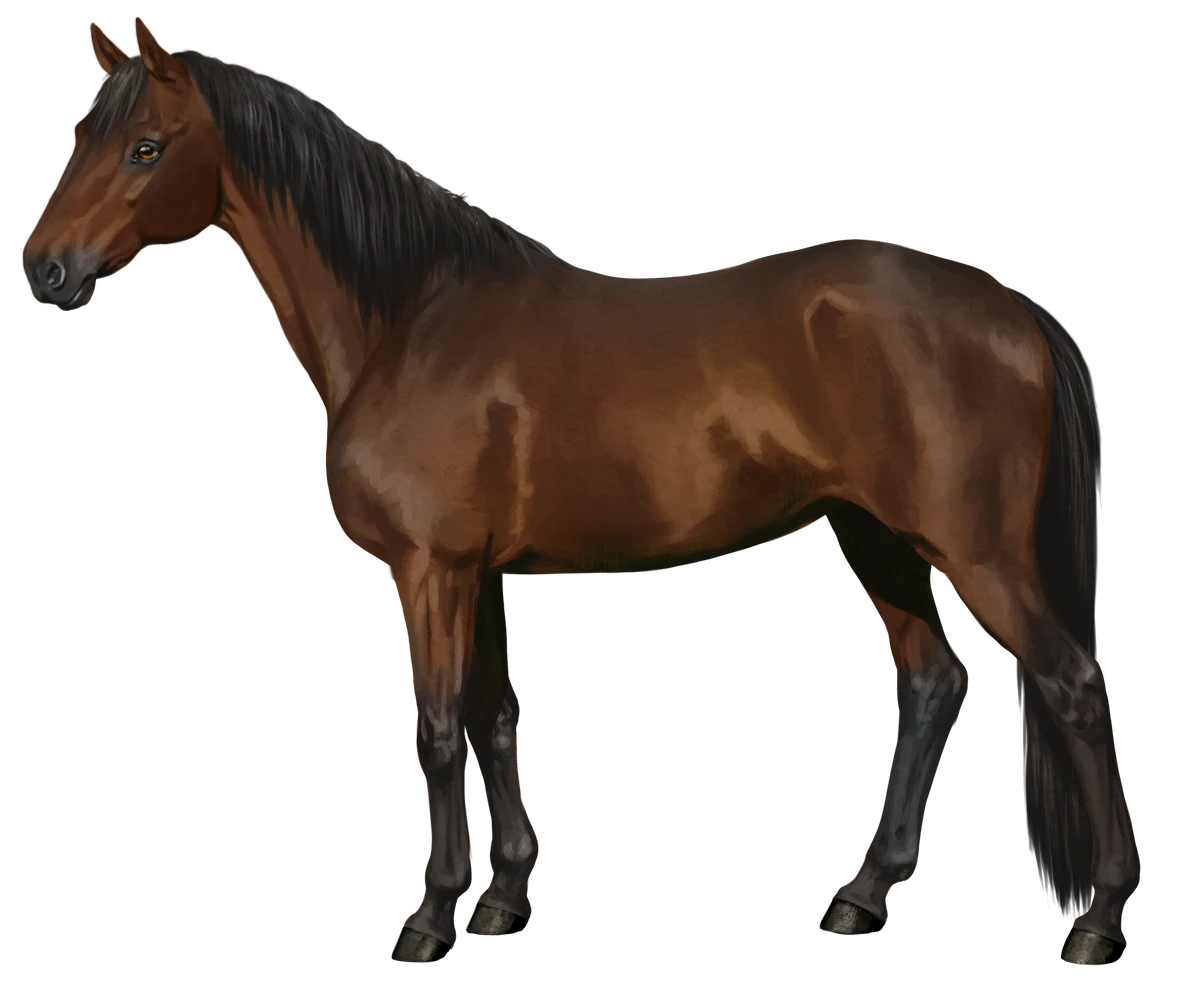
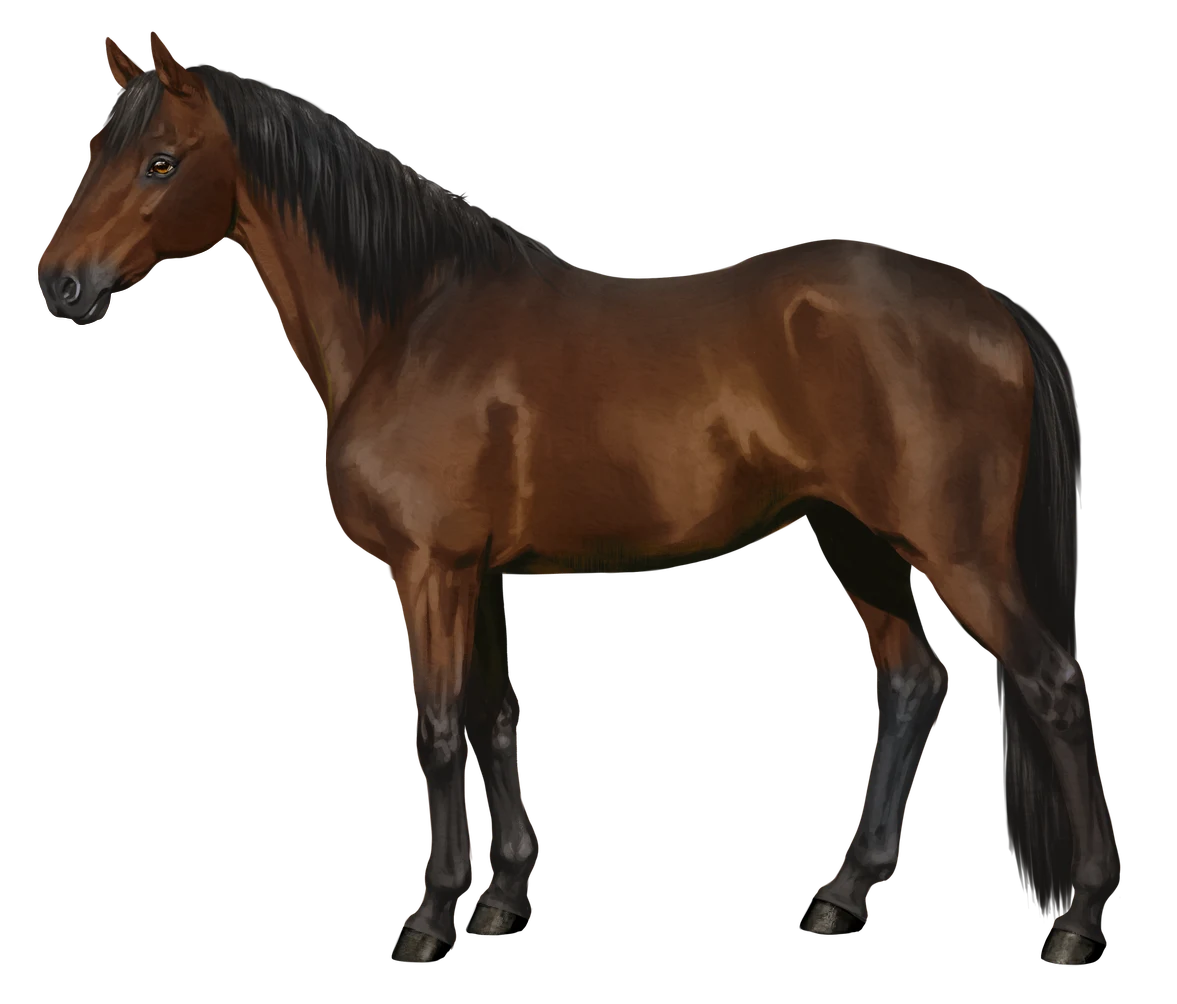
A horse’s silhouette combines several separately inherited components. Head profile, bone, muscling, withers and croup have ordered variants determined by allele pairs. Leg length, neck length, body proportions, head size and frame height are continuous traits.
Body mass results from the interaction of bone and muscling. Neck thickness is linked to it, while neck length is a separate trait. Different combinations of mass and proportions are therefore possible: a fuller-bodied horse may have a different neck or leg length from another horse of similar mass. Equal height does not imply equal proportions either: height at the withers combines frame height and leg length.
For ordered conformation traits, the phenotype depends on the mean of the allele pair’s values, with intermediate values assigned to an available visual variant according to the model’s rules. An extreme trait can consequently remain hidden in the first generation and reappear in the next.
Head profile provides an example. Crossing a −1/−1 horse with a concave profile and a 0/0 horse with a straight profile produces −1/0 offspring, also with a straight profile. Two such individuals can nevertheless produce a −1/−1 foal. In this mating, the probability of the concave profile reappearing is 25%.
Neck length
Body length
Leg length
Parents (P)
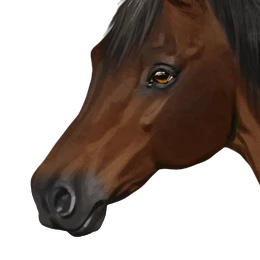
Concave profile · −1/−1
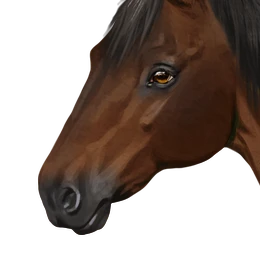
Straight profile · 0/0
First generation (F1)
Straight profile, carrier · −1/0
Second generation (F2)
Concave profile · −1/−1
25%
Straight profile, carrier · −1/0
50%
Straight profile · 0/0
25%
Quantitative traits and maintaining proportions
For continuous traits, the starting point is the mean of the parents’ values, supplemented by variation in the offspring and bounded by the range applicable to the mating. A foal usually remains close to its parents, but its value may fall outside the interval between theirs.
Frame height, head size and leg, neck and body proportions also tend towards the centre of the breed’s range. Maintaining a strongly extreme type therefore requires consistent selection over successive generations. Producing a single exceptionally tall or long-legged individual does not by itself establish those qualities in a line.
Colour traits are not subject to the same pull towards the centre. Selecting a particular shade can therefore be a separate breeding direction alongside selection for conformation.
Individual traits combine: the same shade can occur with different conformation, while a similar silhouette can appear in many colours. Breeders can pursue a particular combination of proportions, hair, markings and colour, rather than limiting their goal to a single colour name.
Hair and white markings
Hair abundance and texture are shared by the mane and tail. Feathering is inherited separately, and its visible expression also depends on the hair traits. These features contribute to a horse’s type as clearly as head profile or body mass.
White markings have their own inheritance system. Each of the four legs has a separate locus affecting marking height. An additional, shared white-amount component determines the level of the head marking and shifts marking heights on the legs. Tobiano is a separate locus whose presence further increases white on the legs.
This model allows selection for both the amount of white and its distribution. Obtaining four high markings is a different goal from producing a horse with one high marking and a small facial marking. A large amount of white alone does not imply tobiano.
An inherited trait should be distinguished from an identifying detail. Genes determine the head-marking level, but the particular drawing is chosen at birth from those available for that level. A blue eye is likewise not passed on as a separate allele: its occurrence is determined by a colour-dependent birth roll, and it is always present with double Cream.
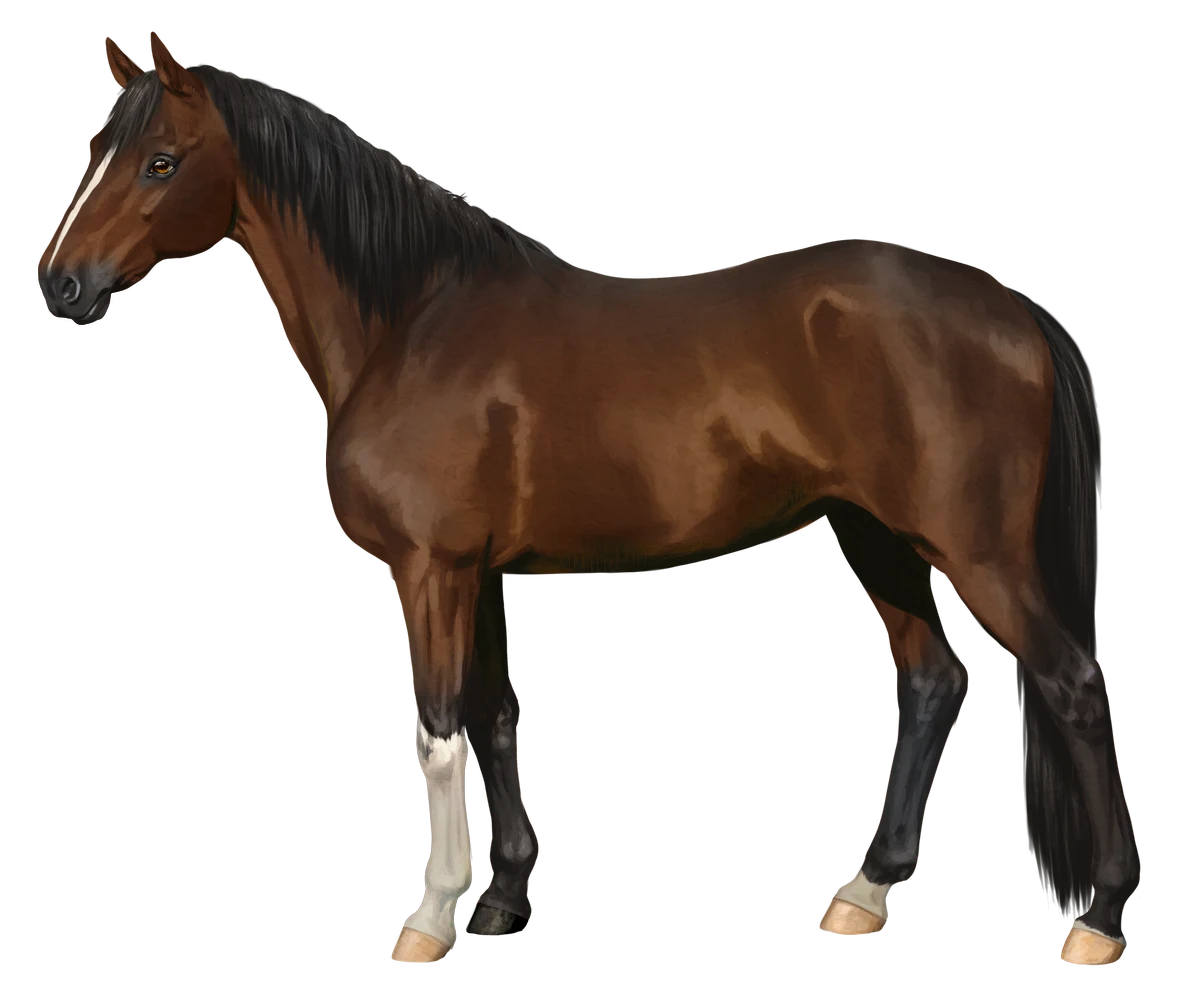
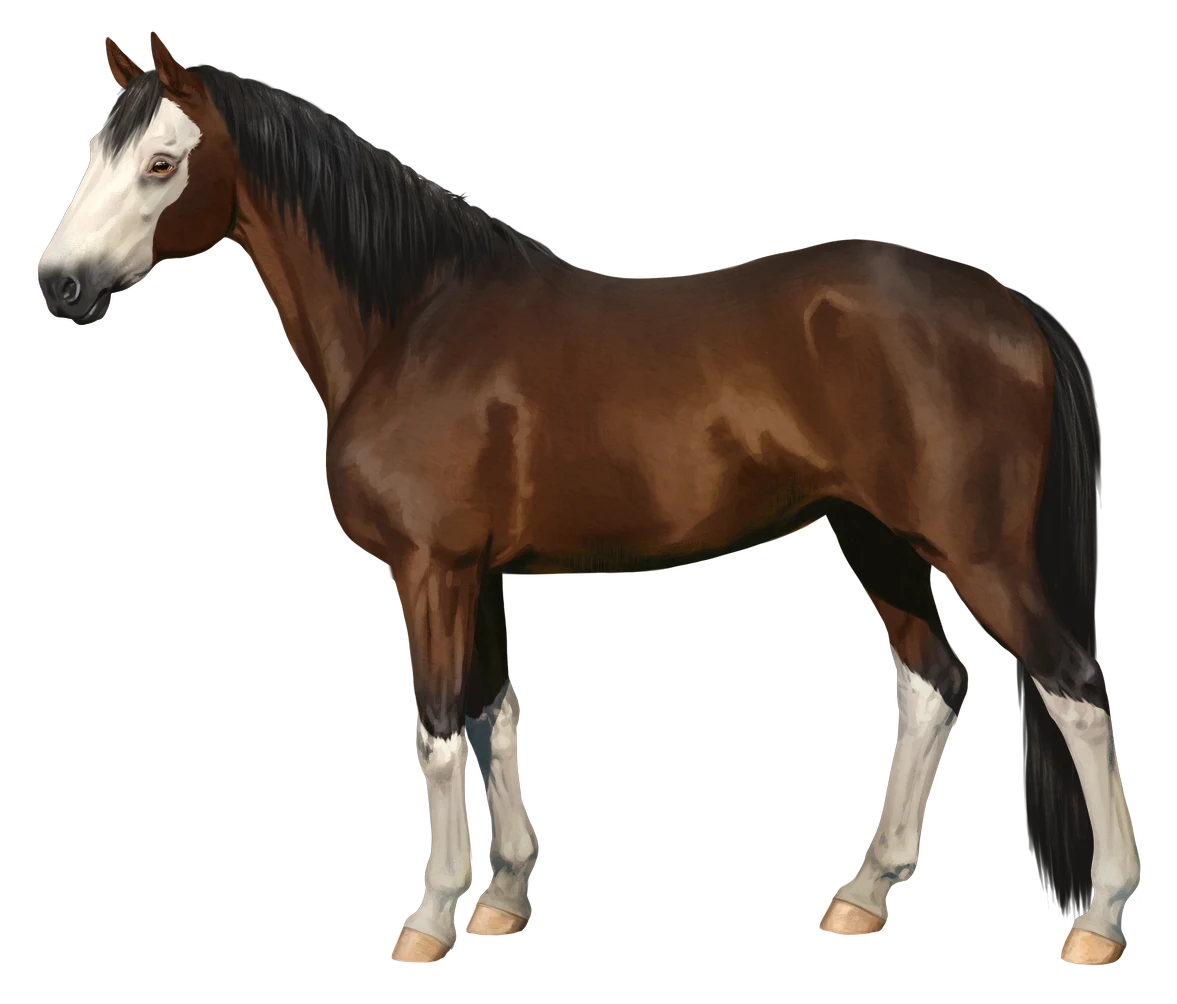
Evaluating a line requires observing its offspring
EWO combines allelic inheritance, quantitative traits and rules for their joint expression. The genetics of conformation and white markings are a model adopted for EWO; its loci and scales do not assert that real equine conformation follows equally simple relationships. For breeders, these rules nevertheless provide consistent conditions for selection: parental traits influence offspring, and the results are visible in the animals’ appearance.
Assessing an individual horse describes its phenotype. Assessing its breeding value also requires observing what it passes to its offspring. Successive generations reveal both established qualities of the line and variation invisible in the parents’ appearance alone. A recognisable breeding type grows out of this work: selecting pairs, evaluating offspring and consistently retaining the desired traits.